EN | IT
Every project starts from what is already there. An Art Nouveau fresco found during construction, a Shanghai longtang alley, a maiolica tradition, a Langhe vineyard's vernacular. Our first move is to read the source carefully: its history, its materials, its place. The second move is to translate, carrying the source toward what the project needs to become. Not preserved frozen. Not erased. Translated.
Every brief is a distance between two things: what a place already is, and what the client needs from it. The work is the translation between them. The studio holds no pre-established language; each project arises from that specific distance. We have worked this way in Torino, in Dubai, and earlier in Shanghai. The place changes; the reading does not.
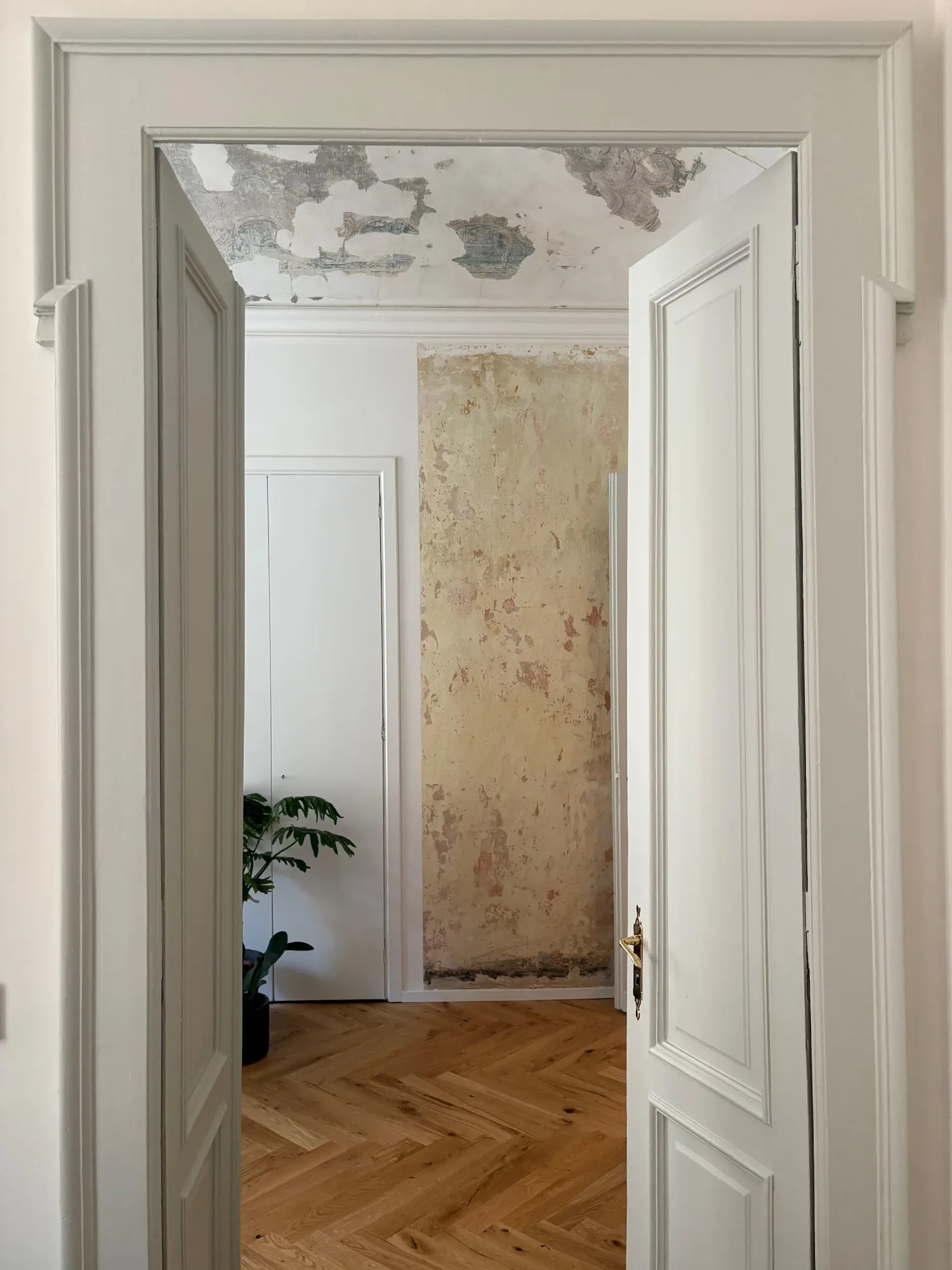
At Casa Giuria, a Liberty-era apartment in San Salvario, a frescoed vault surfaced during construction and fragments of the original wallpaper were left exposed, traces of the home's earlier lives kept visible inside a contemporary plan. At Bertola, the oak floors and art-deco stucco of the original shell stay intact while a single black volume carries the new kitchen. The move is the same in both: don't mimic the heritage, don't erase it, let old and new stay legible side by side.
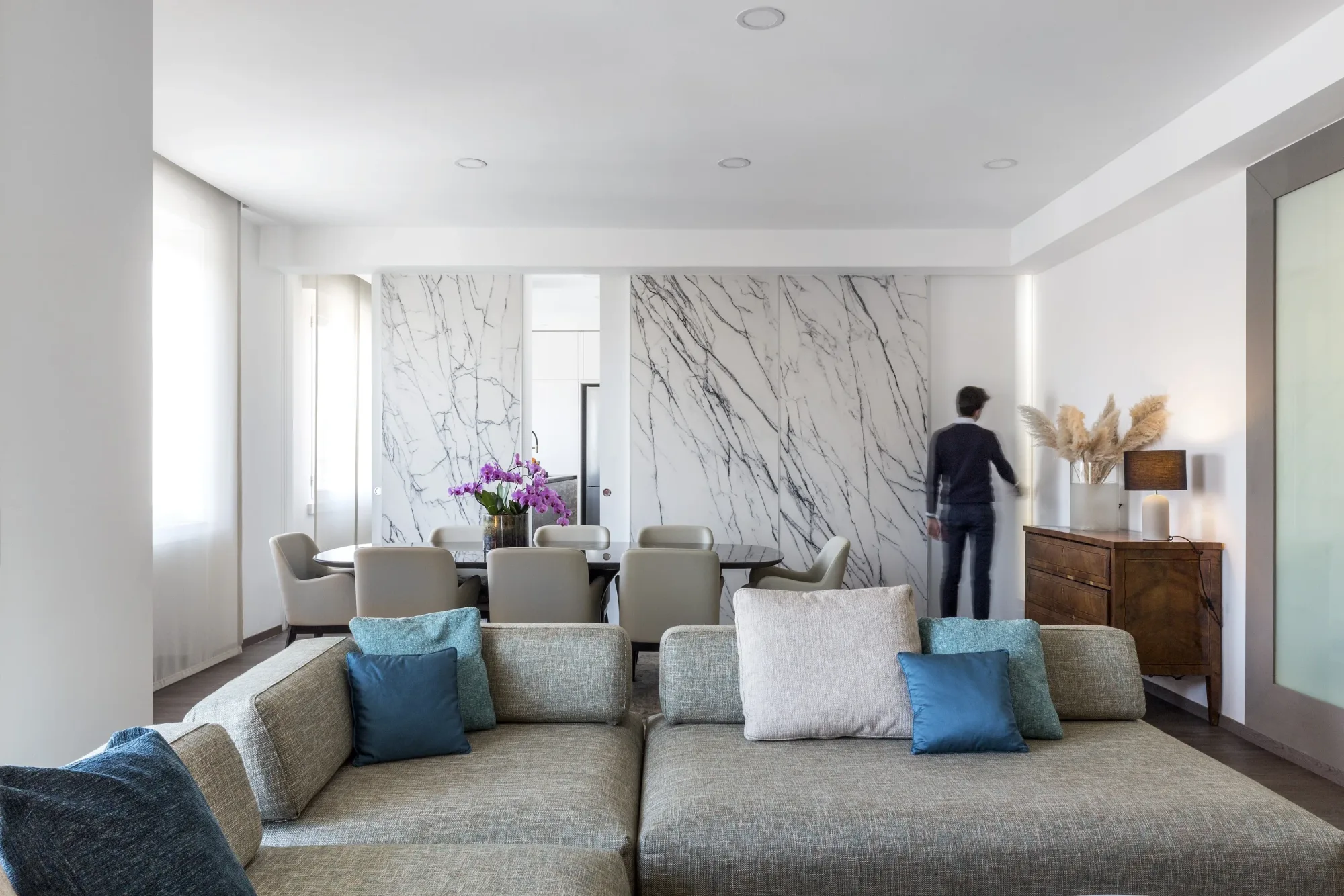
At Bertola, a graniglia floor spreads through the new rooms like a poured liquid; green-toned tile and a single black volume mark every contemporary move against the original oak and art-deco stucco. At Magenta, sliding marble doors and a marble island run a sequence of textures from the entrance through to the kitchen. Each material is left to read for exactly what it is, so the new work declares itself beside the old instead of imitating it.
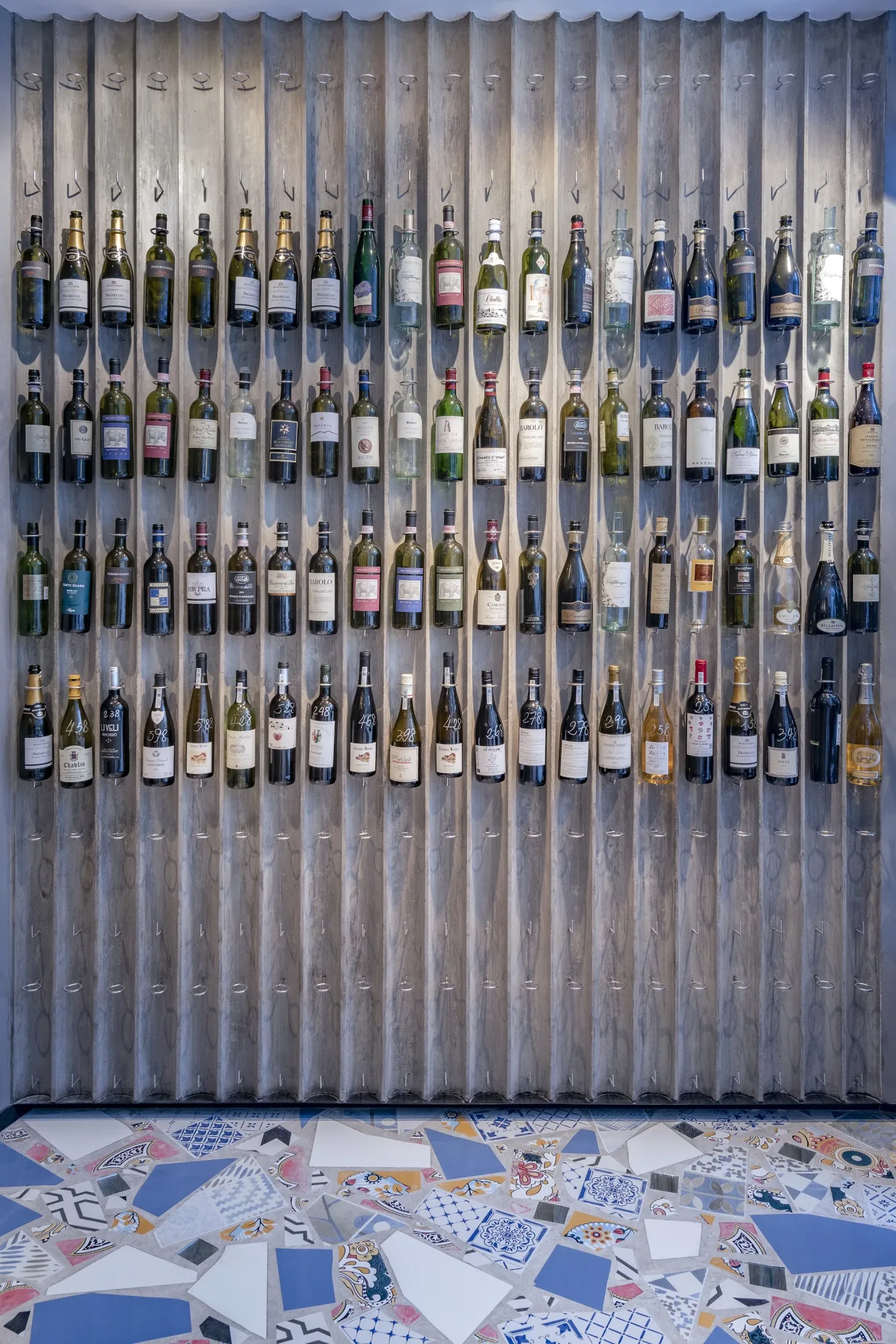
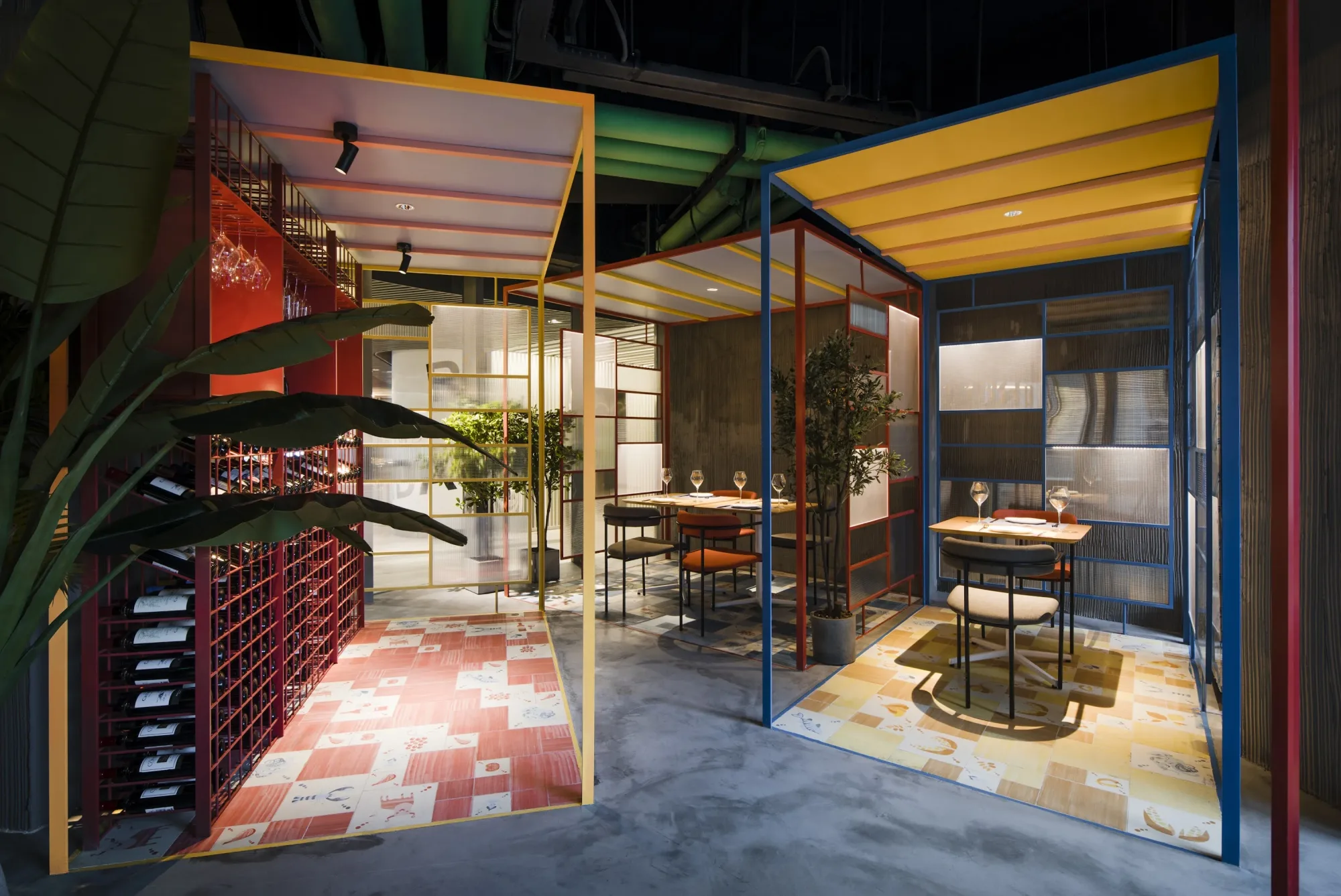
Trevin, a tapas and wine bar in Shanghai, took the Mediterranean tradition, Italian and Spanish, and reworked it through what the studio called a "lost in translation" approach: grooved concrete walls holding an invisible wine rack, a sober balance of hammered steel and trencadís maiolica, recognisable without being literal. Tapa Tapa carried the open, communal spirit of a Spanish mercado to Shanghai's North Bund, a cluster of small rooms each opening to a view of the Huangpu River. The Italian hand is not decoration; it is a way of reading one culture's habits and building them into another's setting.